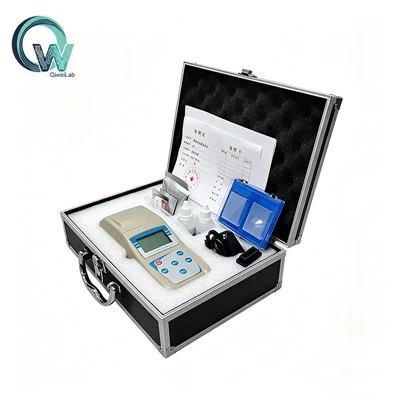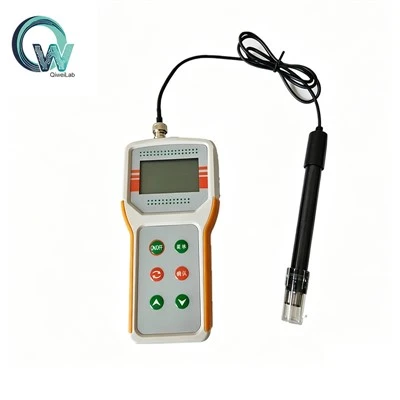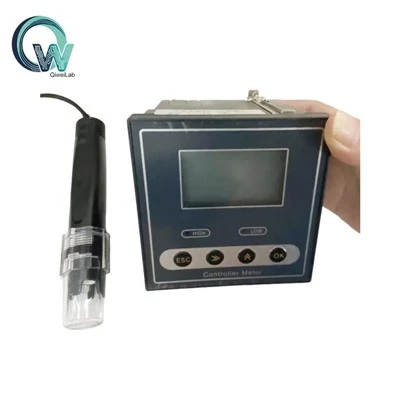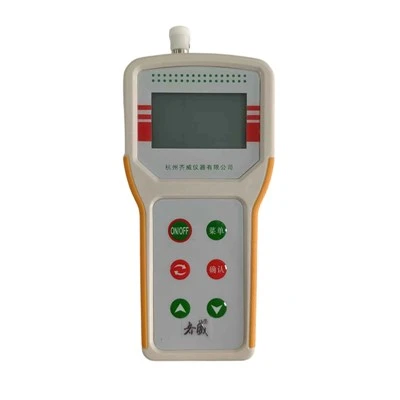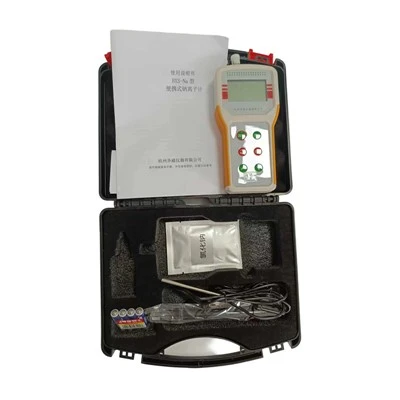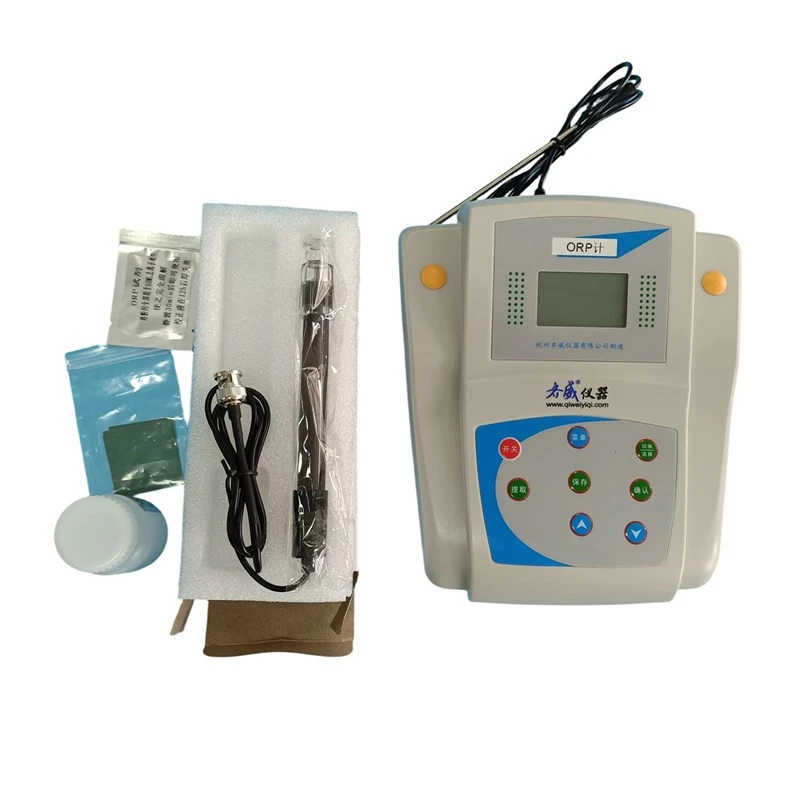
Hangzhou Qiwei Instrument Co., Ltd. is one of the leading manufacturers and suppliers of benchtop orp meter in China. With a professional production team, we are able to meet the needs of the majority of our customers. Welcome to wholesale bulk benchtop orp meter in stock here from our factory. We also accept customized orders.
The Qiwei ORP-1 tabletop ORP meter is intended to measure liquid samples 'oxidation-reduction potential. It is suitable for routine laboratory testing, water quality evaluation, and electrolytic experiments that require ORP measurements, with a dimension range of 1999 mV and a resolution of 1 mV.
The device measures the potential difference between a research electrode and an ORP indicator electrode. Users can compare results under defined testing procedures and use the resulting millivolt studying to determine the oxidation-reduction conditions of a test.
Credible results for use in laboratories depend more on the displayed resolution than just the displayed. When evaluating reproducibility and assessment accuracy, electrode condition, sample temperature, reference electrode stability, common solution quality, and sample temperature should all be taken into account.
Mechanical temperature compensation for 0 - 60 ℃ is included in the ORP-1 product specifications, along with a standard ORP electrode and power adapter.
product key technologies

The Benchtop ORP Meter, also known as an oxidation-reduction potential meter, is a high-precision instrument based on electrochemical principles for measuring the oxidation-reduction potential (ORP) of liquids. It measures the potential difference between the indicator electrode (usually a platinum electrode) and the reference electrode to directly reflect the relative strength of oxidants and reductants in the liquids.
The instrument adopts dual monitoring of mV value and temperature, and is equipped with a standard ORP electrode and a temperature electrode. It provides fast response and good stability, enabling real-time reflection of the liquid's oxidation-reduction state. The integrated temperature compensation function effectively reduces the influence of temperature on potential measuring and ensures precise and reliable data.
It is generally applicable to a variety of industries, including mining and industrial businesses, scientific research institutions, agriculture, healthcare, education, and environmental protection. It can precisely measure the potential (mV) of liquid samples, which aids in determining the disinfection impact, degree of water purification, and reaction end point. It is frequently used in water quality monitoring, sewage treatment, chemical synthesis, food testing, aquaculture, and soil testing.
The instrument is an essential and reliable tool for environmental monitoring, on-site patrol testing, and lab quality inspection due to its straightforward operation, intuitive readings, and cheap maintenance costs.

ORP Resolution, Accuracy and Measurement Verification
The tabletop ORP meter from Qiwei has a stated quality of 1 mV and a measured ORP range of 99.99 mV. The smallest measurement parameter displayed in the resolution should not be taken to be the overall measurement accuracy.
Users may follow manufacturer's instructions and use a suitable ORP standard solution to confirm the instrument and electrode system for reliable laboratory results. The regular solution's reference value at the specified temperature, electrode condition, rinse procedure, and measurement stability should be taken into account during the verification process.
Among the things that are included in a useful measurement workflow are:
Check the ORP electrode to make sure the sensing surface is intact and fresh.
Create a suitable ORP regular solution, verify its expiration date, and make a reference solution.
Rinse the electrode as directed, ensuring that the regular solution is not contaminated.
Wait for the browsing to maintain while dipping the anode in the sample or common solution.
Record the measured mV value along with related sample and temperature data.
Follow the manufacturer's confirmation or ORP offset-adjustment procedures, if necessary, if the reading differs from the recommended standard value.
Verify the Qiwei ORP precision, repeatability, permitted validation or offset-adjustment technique, and relevant measurement uncertainty before using the meter for controlled or high-accuracy testing.
Technical parameter
|
Model |
ORP-1 |
|
Accuracy |
0.01 |
|
Measuring Range |
(0 ~ ±1999) mV; PH (0, 14) |
|
Resolution |
1 mV; PH 0.01 |
|
Temperature Compensation |
0 ~ 60 ℃ manual compensation |
|
Basic Configuration |
ORP electrode, [suitable for measuring of liquids temperature (5~60)°C]; power adapter |
|
PH Value Increase Function |
add PH liquids PH 4.00/6.86; Plastic shell PH composite electrode PH9.18 |
Working condition
|
Parameter |
Specification |
|
Ambient Temperature |
0 ~ 40 ℃ relative humidity: < 85% |
|
Power Supply |
9V DC |
|
Vibration |
No significant vibration |
|
Interference |
There is no external magnetic field interference except the earth's magnetic field |
|
Input Impedance |
1 × 10¹²Ω or more |
|
Zero Drift |
0.01 PH±1 word/2 h |
|
G. Liquids Temperature Compensation Range |
5 ~ 60 ℃ |
|
Size |
230×200×60 mm |
|
Weight |
1.2 kg |
Application
1. Laboratory Research and Electrochemical Experiments
Use the ORP-1 to measure the oxidation-reduction potential of liquid samples during routine laboratory investigations. Researchers can record mV readings at defined reaction stages and compare results under controlled experimental conditions.
2. Pharmaceutical and Biopharmaceutical R&D
ORP measurements can support selected research activities involving aqueous solutions, oxidation-reduction reactions and water quality evaluation. For pharmaceutical and biopharmaceutical laboratories, confirm the required measurement accuracy, documentation, cleaning procedures and quality-system requirements before selecting the instrument for a specific protocol.
3. Electroplating and Metal-Finishing Water Analysis
ORP measurement can help laboratory teams evaluate the oxidation-reduction conditions of compatible process and wastewater samples. When used alongside other analytical methods, ORP readings may assist in investigating treatment performance and changes in water chemistry.
ORP alone does not determine the concentration of a specific metal, contaminant or treatment chemical. Users should select the appropriate analytical method for compliance testing and process control.
4. Wastewater and Water Quality Laboratories
Use ORP readings to compare liquid samples during wastewater treatment studies, water quality investigations and oxidation-reduction process evaluations. Consistent sample handling, electrode maintenance and standard-solution verification are important when comparing results over time.
5. Education and Quality Control
The benchtop format is suitable for laboratory teaching and routine testing workflows where users need to observe changes in oxidation-reduction potential and document mV readings. The actual suitability depends on the laboratory's accuracy, traceability and data-recording requirements.
Hot Tags: benchtop orp meter, China benchtop orp meter manufacturers, suppliers, factory, Benchtop ORP Meter, Online Industrial ORP Contorller, orp meter, Pen Type ORP Meter, Portable ORP Tester