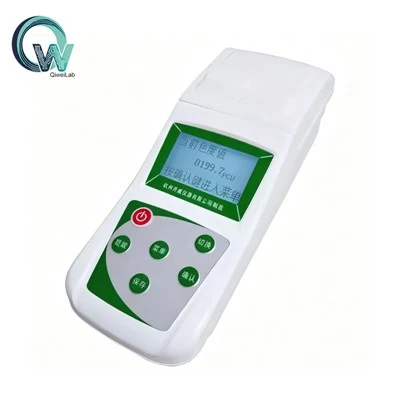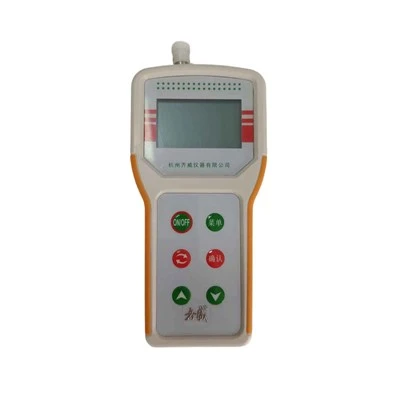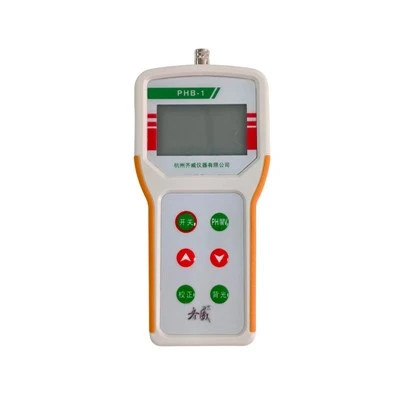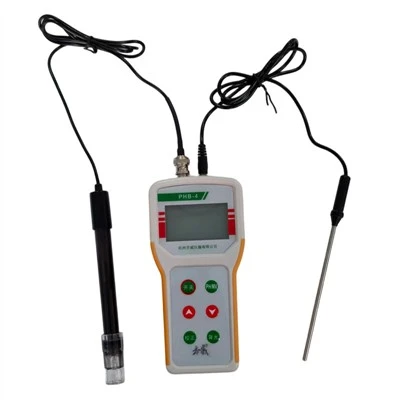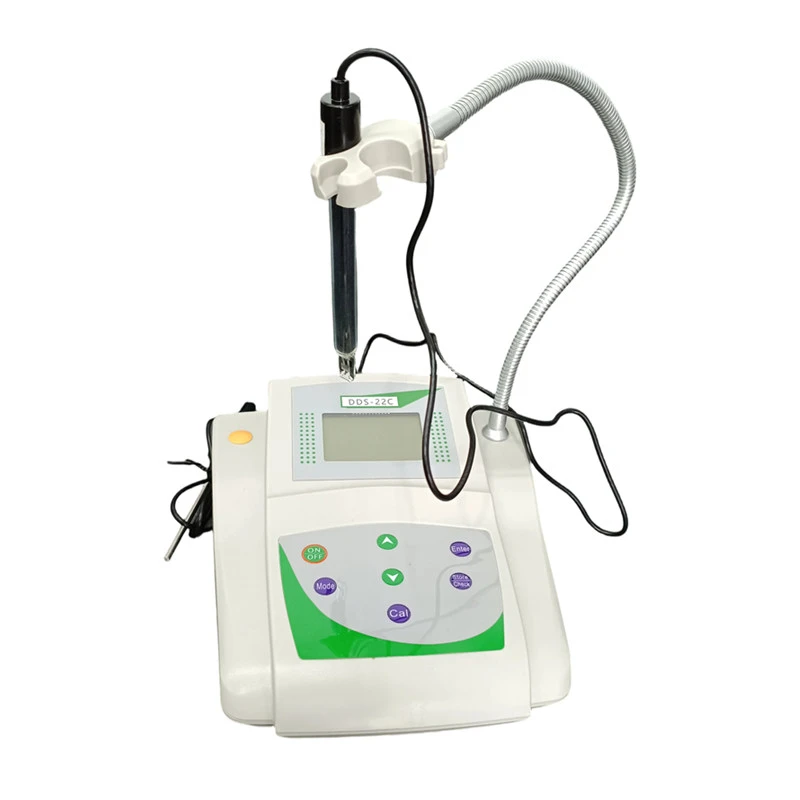
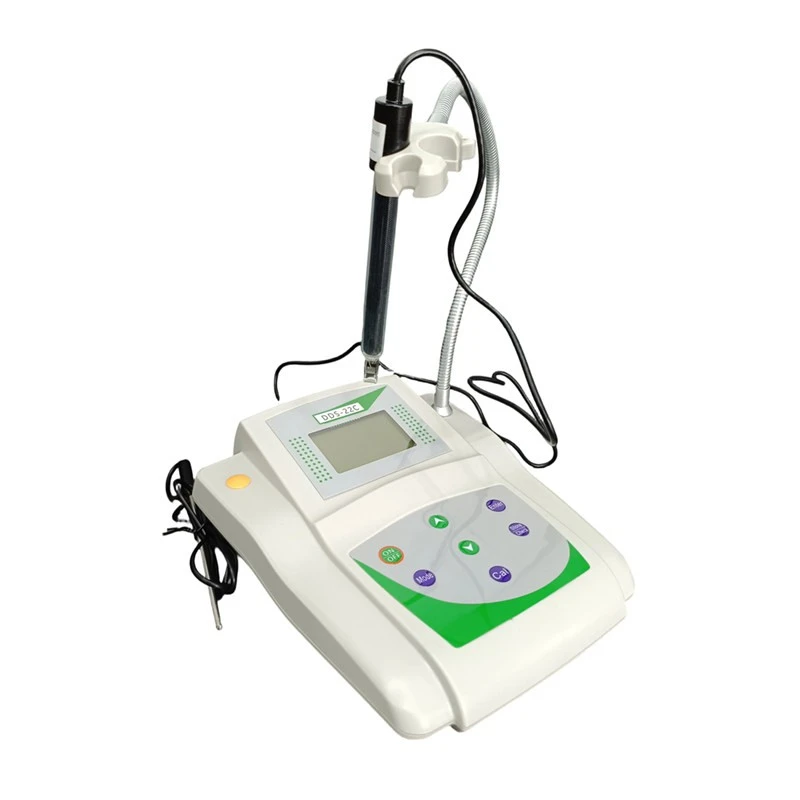
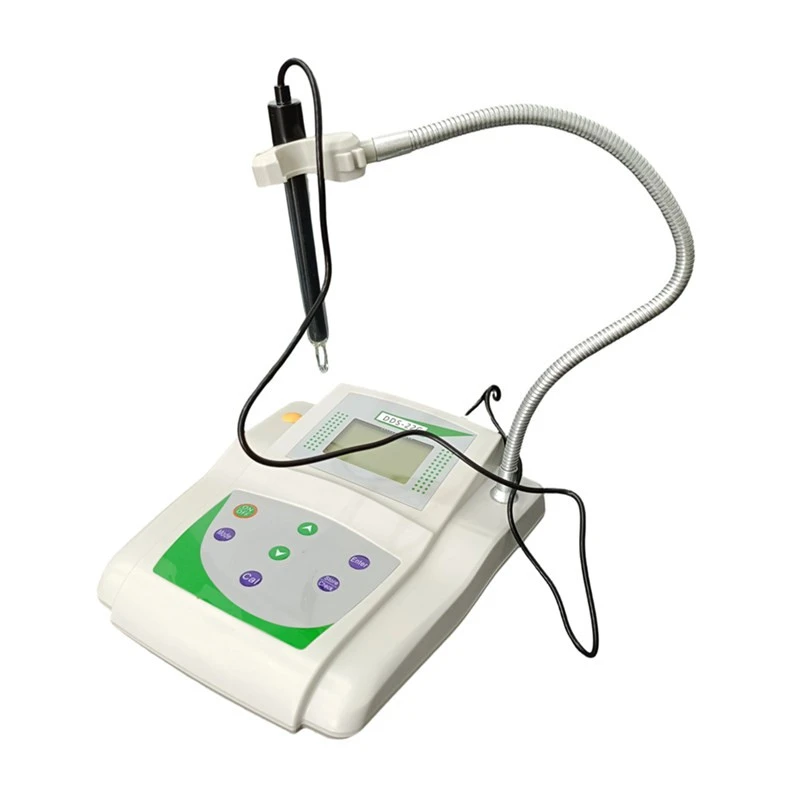
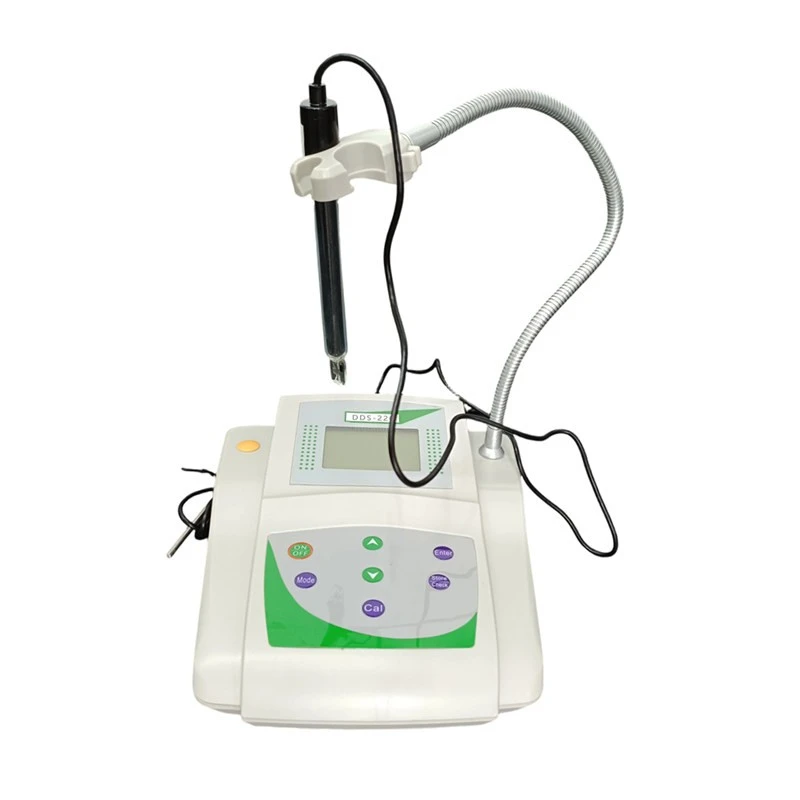
Hangzhou Qiwei Instrument Co., Ltd. is one of the leading manufacturers and suppliers of benchtop digital conductivity meter in China. With a professional production team, we are able to meet the needs of the majority of our customers. Welcome to wholesale bulk benchtop digital conductivity meter in stock here from our factory. We also accept customized orders.
Benchtop Conductivity Measurement Capability: 0–200 mS/cm
A variety of aquatic samples can be tested for conductivity in a lab setting using the DDS-11A Benchtop Digital Conductivity Meter.
The device can be set up with conductivity cells of various constants to match the electrical conductivity of the sample being examined, and its measurement capabilities extends up to about 200 mS/cm.
The conductivity cell must match the anticipated conductivity range of the sample, so choosing the right cell constant is crucial.
The cell constants K=0.1, K=1.0, and K=10.0 are accessible for typical applications. Depending on the electrode configuration used, the instrument design also allows a K=0.01 option for applications involving very low conductivity or high-purity water.
product key technologies

This Benchtop Digital Conductivity Meter is a professional analytical instrument developed for physical and chemical testing of liquids, specially designed for measuring conductivity parameters of various aqueous solutions. Built with a high-end intelligent microcomputer control system, the device features fast computing and processing speed, enabling rapid and accurate quantitative analysis of conductivity for all kinds of conventional liquids.
When equipped with an optional dedicated electrode of 0.1 cell constant, it can also achieve precise conductivity measurement of pure water and high-purity water, meeting the stringent testing requirements for high-purity water.
Adopting high-quality core hardware, the instrument delivers stable overall operation, outstanding measurement resolution and accuracy, as well as strong environmental anti-interference ability. It is suitable for long-term continuous operation under complex working conditions. With a humanized and streamlined design, it is simple to operate and easy to maintain, effectively reducing overall application costs.
The benchtop digital conductivity meter covers a wide range of application scenarios and is widely used in light industry manufacturing, chemical production, food processing, pharmaceutical manufacturing, public health, energy supply, environmental monitoring, university scientific research and other fields. Whether for daily production quality control on production lines, routine physical and chemical analysis in laboratories, or on-site sampling and testing outdoors, the instrument outputs accurate, stable and traceable test data, fully meeting liquid conductivity detection demands across multiple industries and scenarios.

How to Select Conductivity Cell Constant?
The conductivity electrode's matching to the sample's electrical conductivity is determined by the conductivity cell constant, or K.
Because the measurement method must maintain an appropriate electrical response within the expected conductivity range, different sample types require different cell constants.
K = 0.01
When measuring high-purity or ultrapure water, a K=0.01 cell is designed for very low conductivity applications.
Common uses could be:
• Water with high purity • Water that is ultrapure • Water with a low ion content • Water quality tests in laboratories
K = 0.1
When analyzing relatively clean water or diluted aqueous solutions, a K=0.1 cell is frequently chosen since it is appropriate for low-conductivity samples.
Common uses could be:
•Water that has been purified • Water used in laboratories • Process water with low conductivity • Diluted solutions
K = 1.0
For routine conductivity measurements in a variety of laboratory and aquatic samples, K=1.0 is a general-purpose cell constant.
When the anticipated conductivity is within a standard conductivity cell's typical operating range, it can be taken into consideration.
K = 10.0
For samples with higher conductivity, when a lower cell constant might not be the best configuration, a K=10.0 cell is designed.
Common uses could be:
• Solutions with a lot of salt • Concentrated solutions of electrolytes • Samples connected to brine • Process liquids with higher conductivity
Technical parameters
|
Model |
DDS-11A |
|
Measurement Range |
0 ~ 2 × 10⁵ μS/cm |
|
Accuracy |
± 1% F × S |
|
Instrument Stability |
0.50% |
|
Temperature Compensation Range |
15 ~ 35 (℃) |
|
Output Measurement Signal |
0 ~ 20 (mV) |
|
Size |
240×170×60 mm |
|
Weight |
0.7 KG |
|
Power Consumption |
3 W |
|
Specification Constants of Electrodes |
0.01, 0.1, 1, 10 |
Automatic Temperature Compensation for Conductivity Measurement
Conductivity measurements obtained at different temperatures may not be directly comparable without temperature adjustment because electrical conductivity varies with temperature.
In order to account for the impact of sample temperature on conductivity measurement, the DDS-11A has temperature compensation.
During testing, the device modifies the displayed conductivity value in accordance with the chosen compensation technique using the measured temperature information.
When sample temperature fluctuates within the supported adjustment range, this aids users in obtaining more consistent conductivity readings.
How Automatic Temperature Compensation Works?
The temperature sensor gives the current sample temperature, and the electrode response is the first source of the conductivity measurement.
The measured conductivity is then converted toward the chosen reference temperature by the device using the configured temperature compensation relationship.
This procedure makes it possible to compare conductivity values at various sample temperatures with more consistency.
Hot Tags: benchtop digital conductivity meter, China benchtop digital conductivity meter manufacturers, suppliers, factory, Benchtop Digital Conductivity Meter, Handheld Conductivity Meter