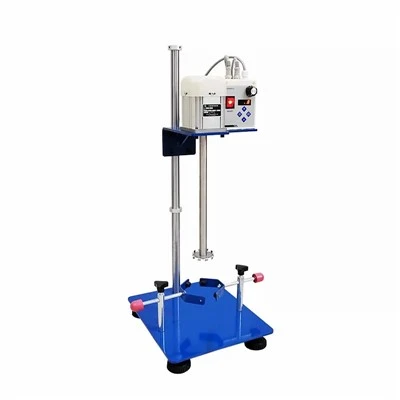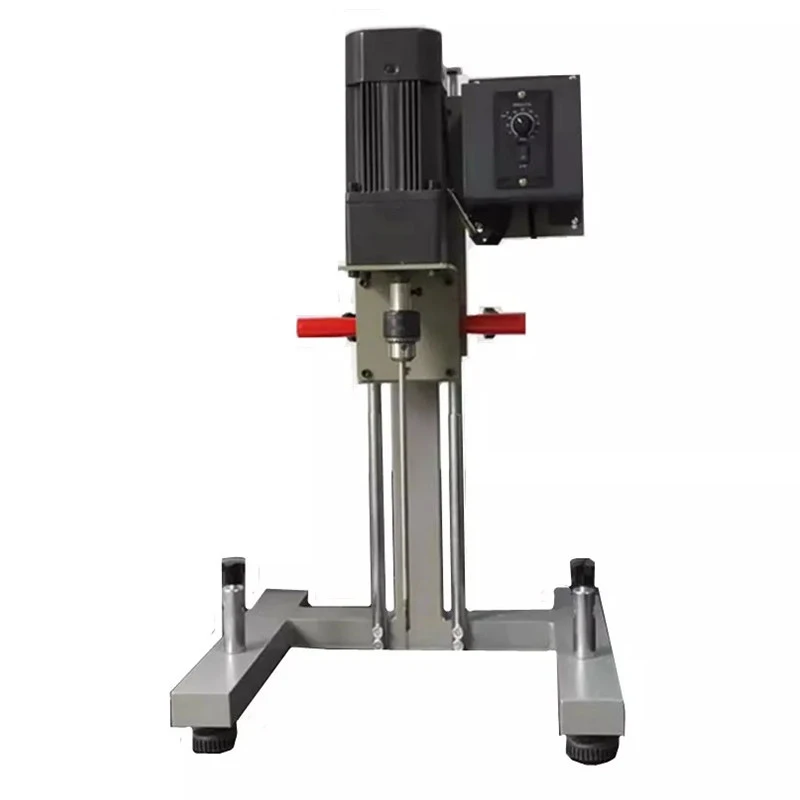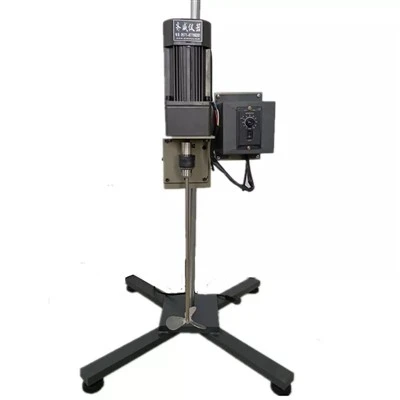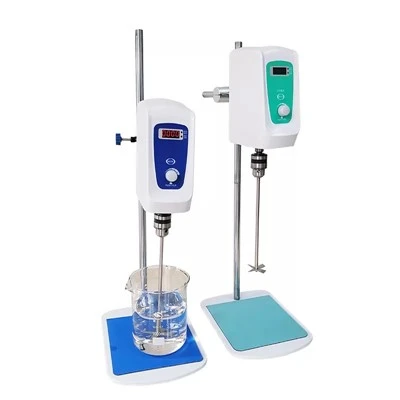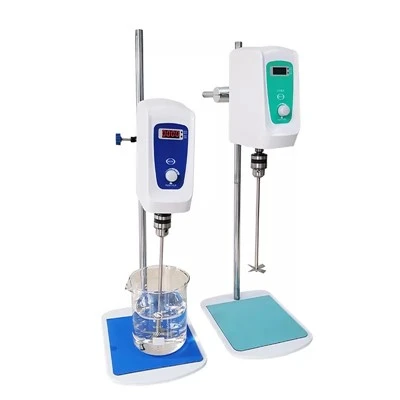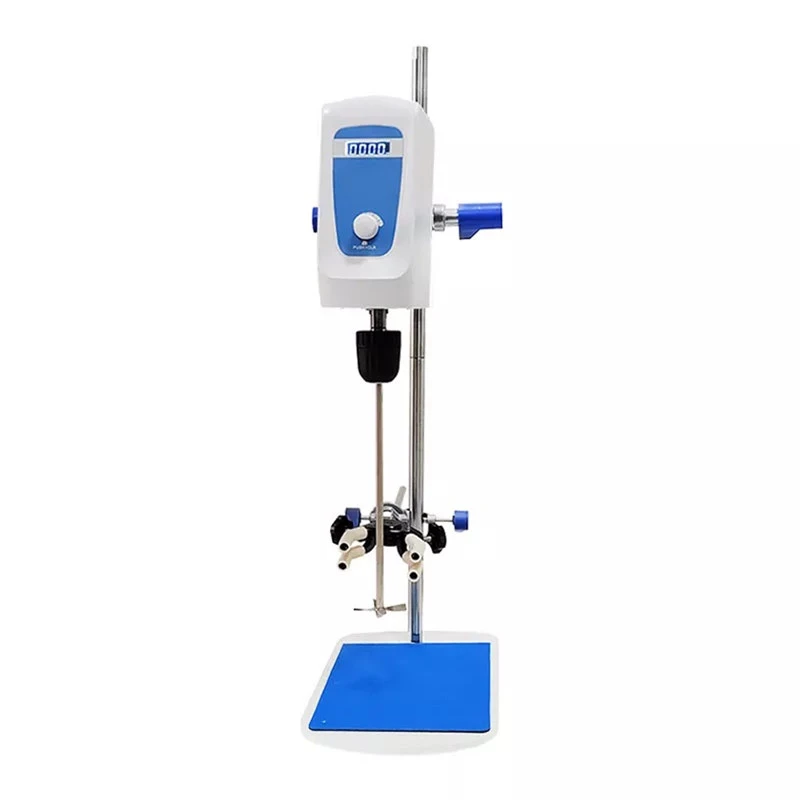
Hangzhou Qiwei Instrument Co., Ltd. is one of the leading manufacturers and suppliers of brushless mixer in China. With a professional production team, we are able to meet the needs of the majority of our customers. Welcome to wholesale bulk brushless mixer in stock here from our factory. We also accept customized orders.
product key technologies

The QW-WS (SH) series brushless mixer ideals for basic laboratory mixing tasks. It delivers consistent, reliable performance with smooth speed control, making it a practical choice for educational labs, routine chemical experiments and simple pharmaceutical preparations. Its compact, space-saving design and easy operation ensure a hassle-free experience for daily use.
Application
1.This mixer equipment finds extensive adoption across various sectors, covering scientific trials, wastewater projects, bulk manufacturing, academic research and certification testing labs.
2.Laboratory practitioners adopt the device for organic synthesis, biopharma preparation and environmental monitoring assignments, optimizing experimental workflows and achieving homogeneous liquid blending.
3.The instrument assists in developing water purification facilities, simulated environment trials and research initiatives for municipal tap-water plants and wastewater treatment stations.
4.Industries including petrochemical processing, food deep-processing and pigment fabrication commonly employ it to boost reaction yields and keep finished goods' properties consistent.
5.Most university faculties and professional research institutes furnish their labs with this six-position stirrer for teaching and research purposes.
6.It serves conventional analytical testing needs within environmental governance, petroleum exploitation, chemical processing, metallurgy, light manufacturing and medicine production fields.
Technical Parameter
|
Model |
QW-WS60-SH |
QW-WS100-SH |
QW-WS200-SH |
|
Motor Power |
60w |
100W |
200W |
|
Timing Function |
No |
||
|
Speed Range |
100-1600rpm |
||
|
Power Supply |
220V 50Hz |
||
|
Drill Chuck' Diameter |
0.5-10mm |
||
|
Stirring Rod Material |
Stainless steel cross stirring paddle |
||
|
Stirring Rod |
φ7×250mm |
||
|
Speed Display |
LCD display, digital speed regulation |
||
|
Size |
200×280×660mm |
||
|
Weight |
9kg |
||
Maintenance Method
1.Carry out periodic cleaning for the brushless motor to block dirt, dust and grease from infiltrating its interior and triggering component abrasion or malfunction.
2.Perform periodic oil top-ups or lubricant replacement to safeguard regular operation of internal components and cut down risks of abrasion and breakdown.
3.Routinely inspect motor wiring and connectors for looseness or scorching damage, and conduct prompt maintenance or part substitution once defects are spotted.
4.Prevent the brushless stirrer from running continuously under heavy loads. Overloaded operation leads to abnormal motor temperature hike and damages internal components adversely.
Hot Tags: brushless mixer, China brushless mixer manufacturers, suppliers, factory