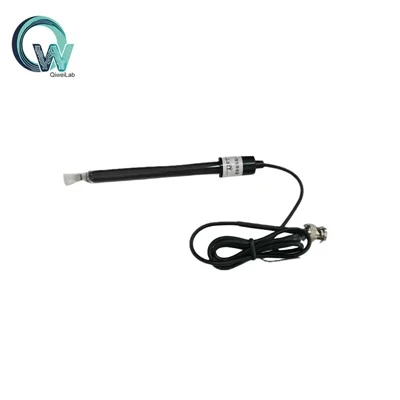
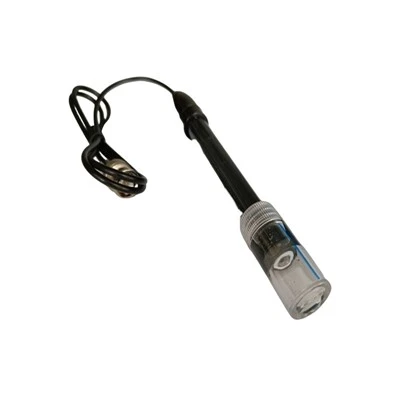
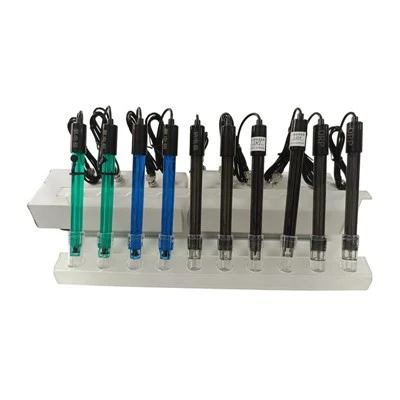
Hangzhou Qiwei Instrument Co., Ltd. is one of the leading manufacturers and suppliers of ph glass composite electrode in China. With a professional production team, we are able to meet the needs of the majority of our customers. Welcome to wholesale bulk ph glass composite electrode in stock here from our factory. We also accept customized orders.
A glass body pH composite electrode integrates the pH sensing element and reference system into a robust glass construction for laboratory and specialized measurement environments.
Compared with plastic-body electrodes, a glass-body configuration can provide advantages in applications involving elevated temperature, high-purity water, selected organic solvents, and laboratory sterilization procedures.
The electrode can be selected according to sample conditions, sensing membrane characteristics, impedance requirements, temperature, and chemical compatibility.
product key technologies

This combined pH glass electrode merges a pH‑responsive glass sensor together with a silver‑silver chloride reference electrode within a single assembly. It functions as the key sensing component for acidity measuring instruments.
The probe can precisely capture shifts in the acid‑base properties of diverse water‑based liquids and output real‑time pH signals from liquid specimens. Being interoperable with mainstream pH meters, it delivers accurate pH readings for lab‑scale analysis, water‑quality surveillance and other relevant measurement scenarios.
Why Choose a Glass Body pH Electrode?
The construction material of an electrode shaft determines whether a pH probe fits particular lab‑working environments.
Glass‑constructed electrodes offer distinct advantages for measurement scenarios that would place heavy stress on polymer‑made outer casings.
Listed below are typical reasons to opt for a glass‑shaft pH electrode:
1. Lab‑based detection carried out under elevated‑temperature conditions
2. Testing of high‑purity water samples with low conductivity
3. Measurement tasks involving specific organic‑solvent environments
4. Laboratory workflows requiring sterilization and disinfection treatment
5. Use cases requiring chemically inert glass housing material
6. Research‑grade projects where sample‑probe compatibility is a top priority
While selecting probes for niche and demanding use cases, users need to evaluate three key aspects: the sensing membrane, reference assembly, and connector design.
Technical parameters
|
Model |
95-1 |
|
|
Measuring range |
PH |
0~14 |
|
Measuring temperature |
℃ |
0~80 |
|
Zero |
PH |
7±0.5 |
|
Alkalinity error |
mV |
<15 |
|
PTS |
/ |
>98 |
|
Response time |
min |
<2 |
|
Internal resistance |
MΩ |
<250 |
|
Repeatability |
/ |
<0.017 |
|
Noise |
mV |
<0.5 |
Precaution
1.For brand‑new electrodes or units that have sat idle over an extended period, submerge both the electrode bulb and sand core inside 3N KCl solution for an 8‑hour activation soak.
2.The connector plug of the pH glass combination electrode must stay free of dirt and remain dry.
3.3N KCl solution acts as the electrode's outer reference electrolyte.
4.Cross‑contamination among different liquid samples must be avoided throughout measurement procedures, otherwise testing precision will suffer.
5.Contamination on the electrode bulb or sand core will lower PTS performance and bring sluggish response speed. Upon measuring contaminated samples, users need to select a cleaning solvent matching the pollutant properties to restore normal electrode performance.
6.Prolonged immersion of pH glass combination electrodes inside fluoride‑containing acid solutions is not allowed.
7.Before putting pH glass combination electrodes into service, take off the rubber sleeves covering the ceramic sand core and filling hole. 8.This guarantees proper outflow of the salt‑bridge electrolyte prior to measurement.
Maintenance
Because the sensing membrane might be harmed by impact, scratches, or inadequate cleaning, glass electrodes must be handled carefully.
Among the suggested practices are:
1.Both before and after the measurement, rinse the electrode.
2.Steer clear of hitting containers with the glass sensing membrane.
3.During storage, make sure the detecting membrane is adequately hydrated.
4.Make use of cleaning techniques suitable for the residue from the sample.
5.When necessary, recalibrate after extended storage or thorough cleaning.
6.Before using, check the detecting membrane and glass body.
To increase repeatability when working with high-purity water or organic solvent samples, follow a standard conditioning and measuring process.
When Should You Choose a Glass Body pH Electrode?
A glass‑shaft pH probe is worth considering if your testing scenario matches any of the conditions listed below:
1.Samples to be measured feature elevated temperatures
2.High‑purity water or liquids presenting low‑conductivity characteristics
3.Working environments with contact against organic solvents
4.Special‑purpose chemical research projects
5.Lab operations that call for sterilization handling
6.Demands for chemically resistant electrode housing
For conventional water‑sample tests conducted at ambient temperature, standard plastic‑bodied pH probes can serve as the more budget‑friendly alternative.
Such distinction helps end‑users pick suitable probes according to real‑world application requirements, rather than blindly choosing glass‑type units merely for the label of laboratory‑grade equipment.
FAQ
1.Why go with a glass body rather than a plastic one?
Applications involving high temperatures, certain chemical solvents, pure water, or specific laboratory conditions might favor a glass body.
2.Can high-purity water be used with a glass-body pH electrode?
It may be appropriate, however measuring high-purity water necessitates taking electrode impedance, reference system, sample processing, and measurement technique into account.
3.Can organic solvents be measured with a glass-body pH electrode?
Applications involving specific organic solvents might be appropriate. The solvent, concentration, temperature, and overall electrode architecture should all be taken into consideration while evaluating compatibility.
4.What distinguishes high-impedance pH glass from low-impedance glass?
The impedance characteristic influences the needs of the attached measurement device and is related to the electrical behavior of the glass sensing membrane.
5.Is it possible to autoclave the electrode?
The glass body alone should not be used to determine autoclave compatibility. Prior to autoclaving, confirm the electrode assembly's overall sterilization rating.
Hot Tags: ph glass composite electrode, China ph glass composite electrode manufacturers, suppliers, factory, Conductivity Sensor Element, electrode, Ion Selective Electrode, PH Corrosion Resistant Electrode, PH Flat Electrode, PH Glass Composite Electrode