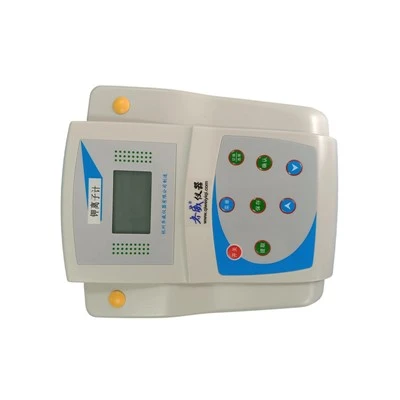
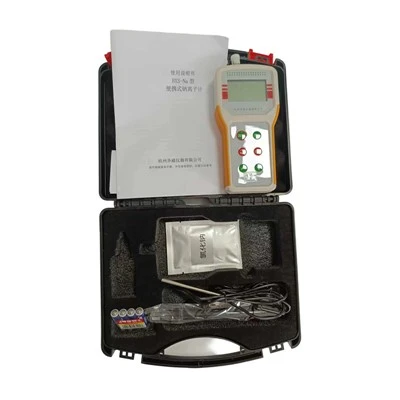
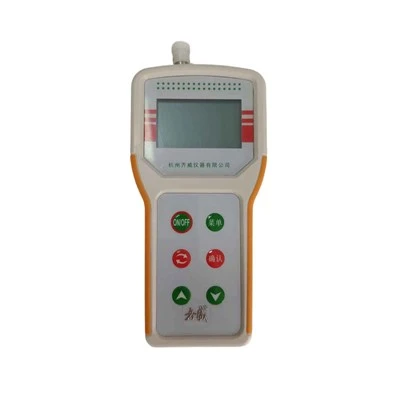
Hangzhou Qiwei Instrument Co., Ltd. is one of the leading manufacturers and suppliers of portable multi-parameter cadmium ion concentration meter in China. With a professional production team, we are able to meet the needs of the majority of our customers. Welcome to wholesale bulk portable multi-parameter cadmium ion concentration meter in stock here from our factory. We also accept customized orders.
Portable Cadmium Testing for Field Environmental Monitoring
The BXS-Cd Portable Cadmium Ion Meter is intended for use in field water-quality screening, wastewater inspections, industrial site investigations, and environmental surveys to detect the concentration of cadmium ions in prepared aqueous samples.
The instrument is designed for applications needing a wide working range from low-concentration tests to significantly higher cadmium levels, with a documented cadmium measurement range of 0.19 μg/L to 19 g/L. Within the designated operating range, the device additionally offers temperature correction and pCd measurement.
Instead of depending solely on centralized laboratory testing, staff can transport the measuring equipment to sample locations thanks to its portable architecture.
However, the measurement range of the instrument should not be taken as its certified technique detection limit for environmental applications. The electrode, calibration process, sample matrix, preparation technique, and analytical workflow all affect detection capability.
product key technologies

Engineered around micro-sized, low-weight construction logic, the portable multi-parameter cadmium ion concentration meter features a streamlined whole-body layout for easy gripping and convenient stowage inside tool carry packs.
Eliminating reliance on immobile lab workstations, the gear permits movable field manipulation. Operators may execute on-location quantitative assessment and instantaneous value viewing for cadmium ion concentrations in aqueous samples directly at water supply points, factory work zones and exterior field locations. Thanks to swift signal reaction and steady measuring capability, it thoroughly accommodates all kinds of off-site inspection tasks: unscheduled outdoor sample gathering, real-time status surveillance beside production lines, and quick contaminant verification during abrupt ecological accidents.
When it comes to practical deployment domains, the testing unit gains broad adoption for lab-based analytical tasks at research centers and teaching facilities, operational surveillance and maintenance tracking of water purification frameworks in power generation stations, composition regulation of manufacturing liquids during chemical processing, and rigid contaminant screening for high-purity solvent utilized in delicate electronic component production.
This tester adapts well to regular screening of natural water reservoirs such as watercourses, lacustrine zones and underground aquifers. Meanwhile, it can precisely gauge cadmium ion levels inside lab ultrapure medium, power plant boiler supplementary liquid, circulating coolant and assorted industrial drainage waste. The device supports direct visualization of two vital measurement parameters: cadmium ion molar concentration and ionic activity magnitude.
Technical parameters
|
Model |
BXS-Cd |
|
Measuring range |
0.19μg/L~19g/L |
|
Basic Error of the Electronic Unit |
±0.02pCd ±1 word |
|
Instrument Basic Error |
±0.05pCd |
|
Calculation Error |
±0.3% |
|
Repeatability Error |
≤±0.03pCd ±1 word |
|
Stability of the Electronic Unit |
±0.02pCd/3h |
|
Temperature Compensation Range |
(5.0~50.0)℃ |
|
Size |
80×85×30mm |
|
Weight |
1KG |
Field Interference Screening Workflow
Technicians can ascertain whether an unexpected cadmium result might be connected to the sample matrix with the aid of a straightforward screening method.
1.Verify the anticipated electrode response by measuring a prepared calibration standard.
2.In accordance with the electrode operating procedure, rinse and condition the electrode.
3.Utilizing the suggested sample preparation and interference-control method, measure the sample.
4.Use a new part of the same sample to repeat the measurement.
5.Compare the outcome with measurements from the past or a sample that was independently examined.
6.Keep the sample for laboratory confirmation using a suitable reference method if there is still a noticeable disparity.
When dealing with complicated industrial effluent, mixed process water, or samples with high dissolved salt concentrations, this method is particularly helpful.
Working condition
|
Ambient Temperature |
(5~40)℃ |
|
Relative Humidity |
≤80% |
|
Power supply |
4×AAA alkaline batteries |
|
Interference |
There is no interference from other magnetic fields except the Earth's magnetic field |
|
Vibration |
No significant vibration |
Step-by-Step Cadmium Field Screening
Step 1: determine the sampling point.
Choose typical sites for environmental, discharge, upstream, and downstream sampling.
Step 2: Gather the Sample
When collecting, use a clean, appropriate sampling container and steer clear of needless contamination.
Step 3: Get the Sample Ready
Use the interference-control or sample preparation method necessary for the chosen cadmium electrode and analytical process.
Step 4: Verify Calibration
Verify that the electrode and meter respond appropriately to the chosen cadmium standards.
Step 5: Measure
After properly submerging the electrode, let the signal steady.
Step 6: Repeat
If the initial result is unexpected or substantially different from previous values, repeat the measurement.
Step 7: Document
Note the time, place, concentration, sample ID, calibration details, and pertinent field conditions.
Step 8: Verify When Needed
When results need independent validation or are meant for regulatory reporting, send representative samples for laboratory analysis.
FAQ
1.What is the BXS-Cd's bottom measurement range?
The stated measurement range is 0.19 μg/L to 19 g/L. This is not necessarily a validated method detection limit; rather, it is the declared instrument measuring range.
2.Is the EPA's detection limit 0.19 μg/L?
No, it is not appropriate to use the instrument's lower measuring range as an EPA method detection limit. EPA detection limits are set within particular analytical techniques and protocols.
3.Is it possible to test wastewater using the meter?
Cadmium screening in well prepared wastewater samples can be supported by it. It is important to assess complex wastewater matrices for possible interference and sample preparation needs.
4.Is it possible to use this meter for EPA testing?
EPA compliance is dependent on the particular analytical method, validation, calibration, sample preparation, and quality-control criteria. However, it can be integrated into an appropriate testing workflow. Approved CWA analytical techniques are kept up to date by EPA independently of general instrument requirements.
5.How can I tell if the instrument is appropriate for my sample?
Give the type of sample, the anticipated concentration of cadmium, the necessary detection limit, and the relevant analytical technique. The suitability of the instrument and electrode configuration can then be ascertained via a technical application study.
Hot Tags: portable multi-parameter cadmium ion concentration meter, China portable multi-parameter cadmium ion concentration meter manufacturers, suppliers, factory, Benchtop Multi Parameter Chlorine Ion Concentration Meter, Benchtop Multi Parameter Cupric Ion Concentration Meter, electrochemical instruments, Portable Multi Parameter Calcium Ion Concentration Meter, Portable Multi Parameter Iodide Ion Concentration Meter, Portable Multi Parameter Kalium Ion Concentration Meter