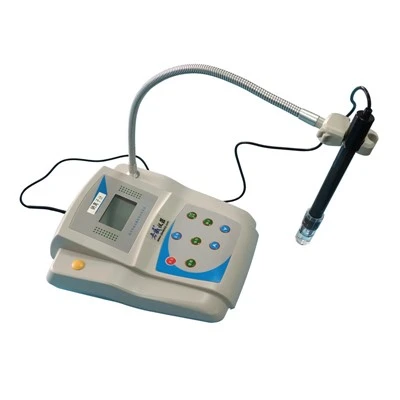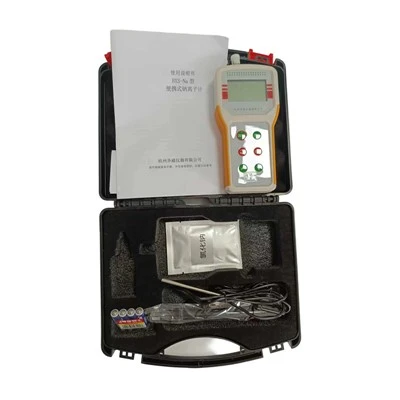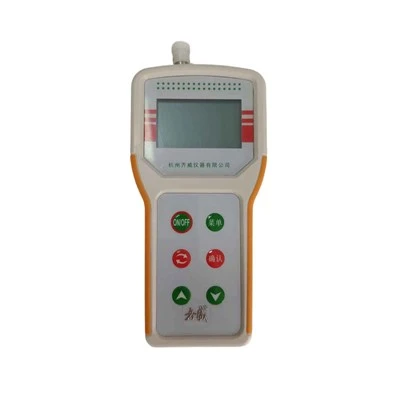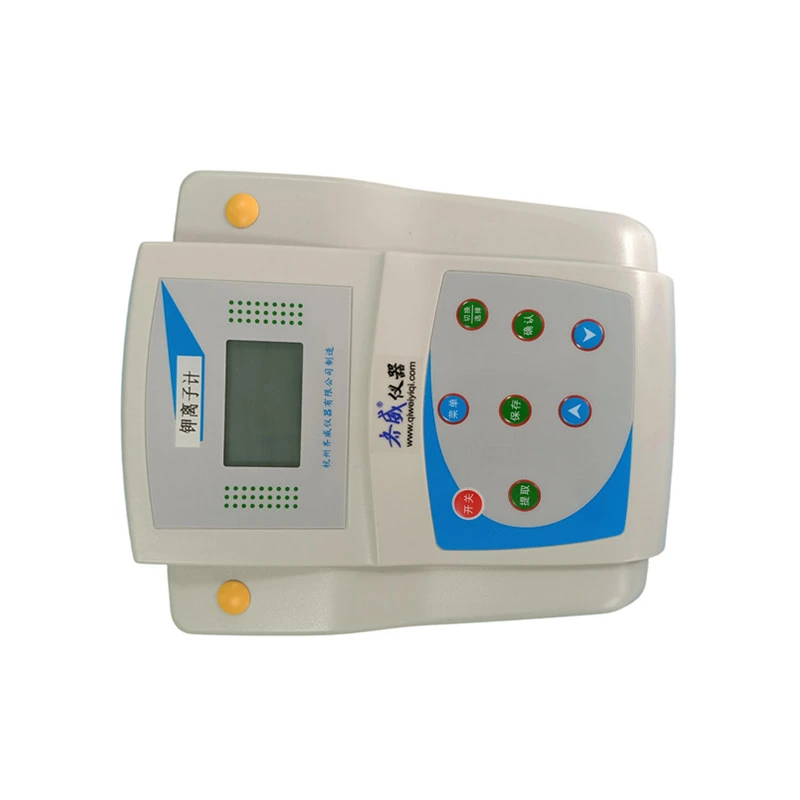
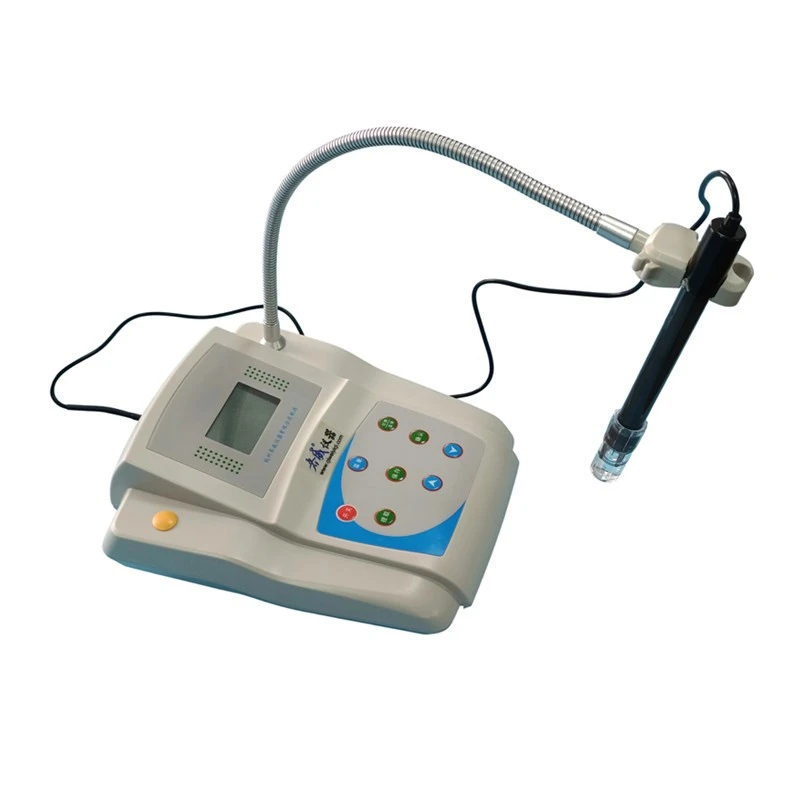

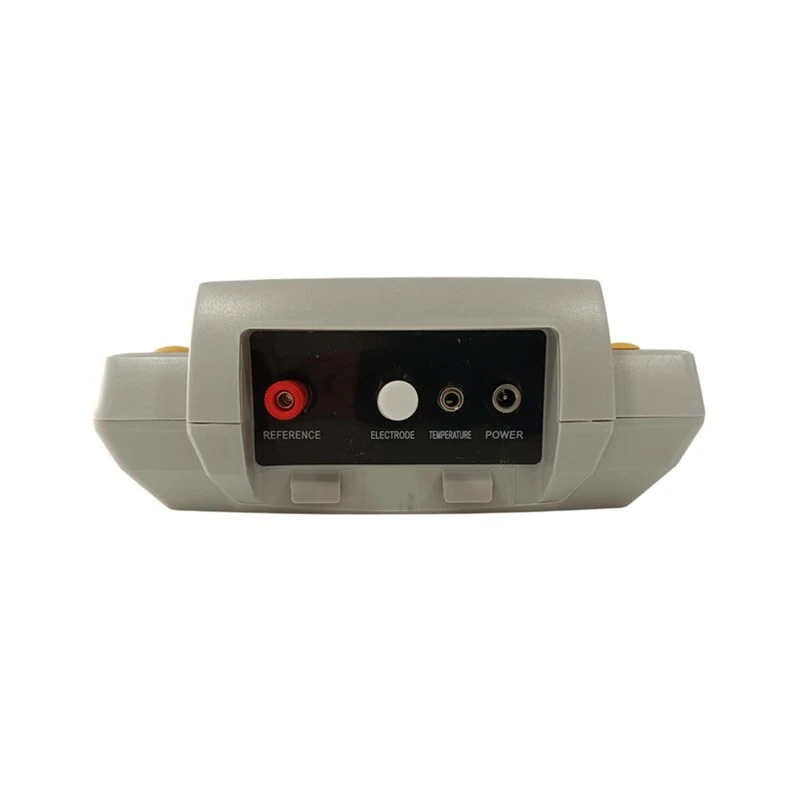

Hangzhou Qiwei Instrument Co., Ltd. is one of the leading manufacturers and suppliers of benchtop multi-parameter kalium ion concentration meter in China. With a professional production team, we are able to meet the needs of the majority of our customers. Welcome to wholesale bulk benchtop multi-parameter kalium ion concentration meter in stock here from our factory. We also accept customized orders.
Benchtop Potassium Ion (K+) Measurement for Laboratory and Agricultural Testing
Potassium ion concentration in aqueous samples can be measured in a lab setting using the PXS-K Benchtop Potassium Ion (K+) Meter.
In agricultural research, hydroponic farming, fertilizer management, water quality monitoring, and plant nutrition studies, potassium is a crucial nutrient parameter.
The device measures pK between 0.00 and 6.00, mV between -1800 and +1800 mV, and potassium ion concentration between 39 μg/L and 39 g/L. Within the designated 5–50°C range, temperature adjustment is available.
The meter can be integrated into laboratory processes for soil extracts, fertilizer solutions, hydroponic nutrient solutions, irrigation water, and other potassium-containing aqueous samples with a compatible potassium ion-selective electrode (K+ ISE).
product key technologies

The PXS-K Benchtop Multi-Parameter Kalium Ion Concentration Meter is a precision analytical instrument professionally used for the accurate detection of kalium ion content in aqueous solutions. It features high measurement accuracy, sensitive response and stable performance. With simple and convenient operation, it is suitable for laboratory assays and on-site rapid detection. Widely applied in water treatment, chemical environmental protection, agricultural research, food, pharmaceutical industry and scientific research, it can quickly determine the kalium ion concentration of various water bodies, providing accurate data support for water quality analysis and process control.
Features
- The PXS-K benchtop multi-parameter kalium ion concentration meter is developed with a single-chip microcomputer core architecture. It boasts straightforward operation procedures, a high-definition digital screen with legible readouts, and delivers stable and highly precise measurement results.
- The device is built with dual temperature calibration modes, including automatic and manual options. When connected to a temperature sensing electrode, the instrument adapts to ambient temperature automatically and shows real-time temperature readings. Without the electrode connection, users can manually set temperature parameters and lock the compensation value. The temperature electrode is an optional part and needs to be ordered separately.
- It can simultaneously display PK measurement parameters and directly read the Kalium ion concentration in water, enabling test data to be viewed at a glance.
- Featuring an elegant and streamlined design, the instrument has a compact build and lightweight body, making it extremely easy to place, relocate and carry.
Technical parameters
|
Model |
PXS-K |
|
Measuring Range |
pK: (0.00~6.00)pK; K+: 39μg/L~39g/L; mV: (-1800~1800)mV |
|
Resolution |
0.01pK |
|
Basic Error of the Electronic Unit |
±0.02pK ±1 word |
|
Instrument Basic Error |
±0.05pK |
|
Calculation Error |
±0.3% |
|
Repeatability Error |
≤±0.03pK ±1 word |
|
Stability of the Electronic Unit |
±0.02pK/3h |
|
Temperature Compensation Range |
(5.0~ 50.0)℃ |
Potassium Ion Calibration Guide
The potassium ion-selective electrode and meter must be calibrated correctly for accurate K+ measurement.
Step 1: Establish standards
Create potassium calibration standards that span the samples' anticipated concentration range.
Step 2: Electrode Conditioning
As directed by the electrode, rinse and condition the K+ ISE.
Step 3: Carry Out Calibration
Before recording each calibration point, measure each potassium standard separately and let the reading stabilize.
Step 4: Verify the Calibration Response
Prior to measuring unknown samples, examine the calibration response.
Step 5: Get the Sample Ready
In accordance with the chosen analytical technique, extract, dilute, filter, or otherwise prepare soil, fertilizer, or hydroponic samples.
Step 6: Measure the Sample
After inserting the electrode into the prepared sample, wait for the reading to stabilize.
Step 7: Document the Outcome
Along with the sample identification and preparation details, note the K+ concentration.
Calibration and sample preparation should be maintained consistently between measurement batches for standard laboratory testing.
FAQ
1.What is measured by a potassium ion meter?
Using a potassium ion-selective electrode, a potassium ion meter determines the concentration or activity of potassium ions (K+) in a suitable aqueous sample.
2.Are potassium and kalium the same thing?
Indeed. The element K is known by its English name, potassium, and its Latin name, kalium. "Potassium Ion (K+) Meter" is the recommended term for product searches in the English language.
3.Is it possible to test potassium in soil using this meter?
K+ in prepared liquid samples is measured by the meter. Before measuring, soil should be removed using the proper laboratory technique.
4.Is it suitable for testing fertilizer?
Indeed. When the sample concentration is appropriate for the electrode and measurement range, prepared liquid fertilizer or fertilizer extracts can be analyzed.
5.Is potassium in hydroponic nutrient solutions measurable?
Indeed. When the sample matrix and potassium concentration are appropriate for the chosen K+ electrode, hydroponic fertilizer solutions can be tested.
6.What is the measuring range for K+?
The PXS-K's stated K+ measurement range is 39 μg/L to 39 g/L. The pK range that has been published is 0.00–6.00.
7.How frequently should the potassium electrode be changed?
A universal replacement interval does not exist. Sample composition, measurement frequency, cleaning, storage, and electrode quality all affect electrode lifetime.
8.How should one maintain a potassium ISE?
After measuring, rinse the electrode to get rid of sample residue, store and condition it according to the guidelines, and recalibrate if responsiveness or stability changes.
Hot Tags: benchtop multi-parameter kalium ion concentration meter, China benchtop multi-parameter kalium ion concentration meter manufacturers, suppliers, factory, Benchtop Multi Parameter Chlorine Ion Concentration Meter, Benchtop Multi Parameter Cupric Ion Concentration Meter, Portable Multi Parameter Cadmium Ion Concentration Meter, Portable Multi Parameter Calcium Ion Concentration Meter, Portable Multi Parameter Iodide Ion Concentration Meter, Portable Multi-Parameter Cupric Ion Concentration Meter