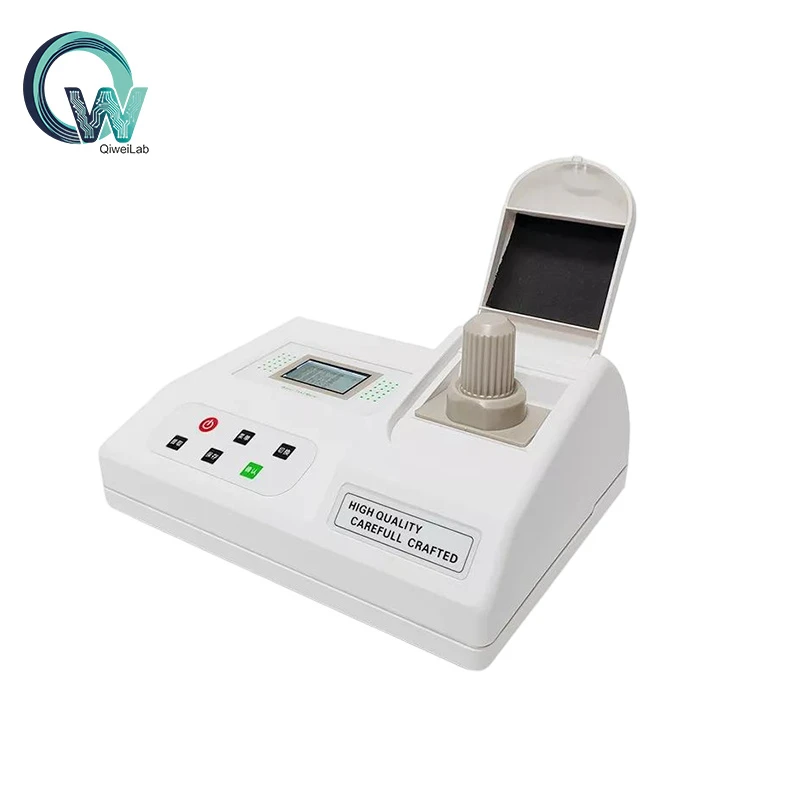
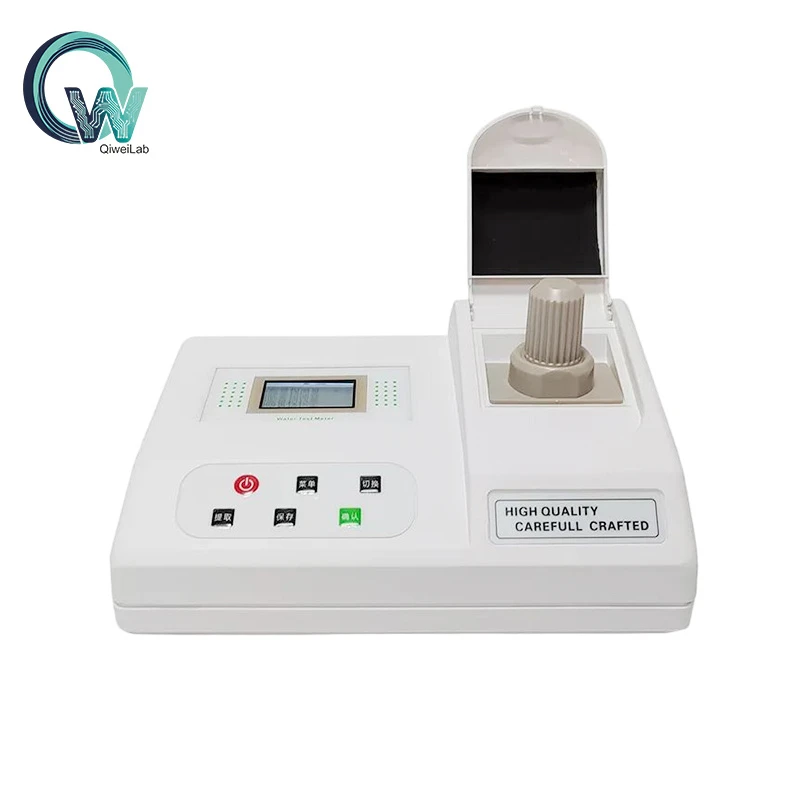

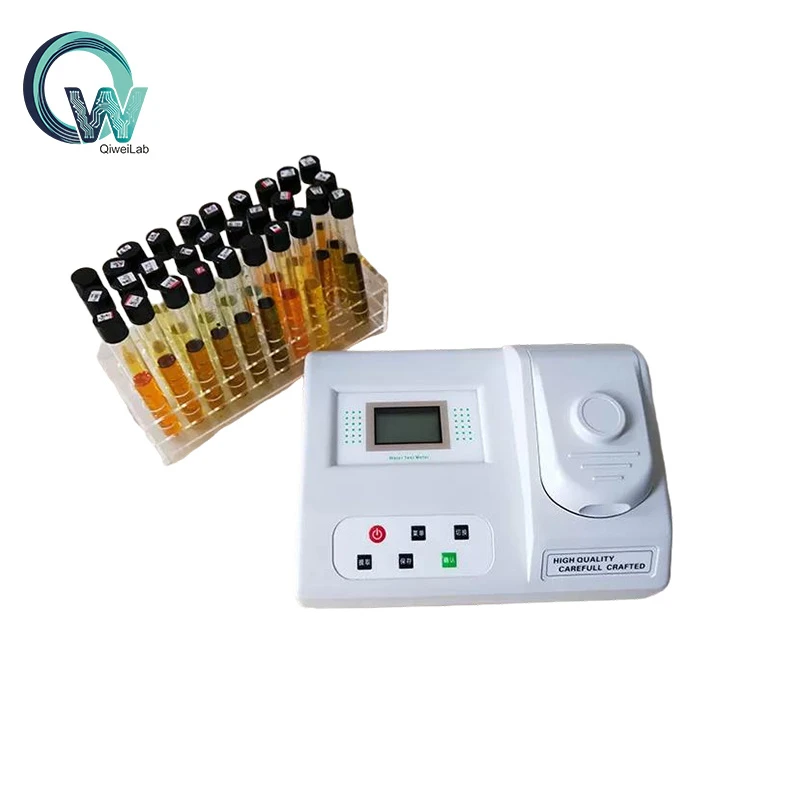
Hangzhou Qiwei Instrument Co., Ltd. is one of the leading manufacturers and suppliers of benchtop cod analyzer in China. With a professional production team, we are able to meet the needs of the majority of our customers. Welcome to wholesale bulk benchtop cod analyzer in stock here from our factory. We also accept customized orders.
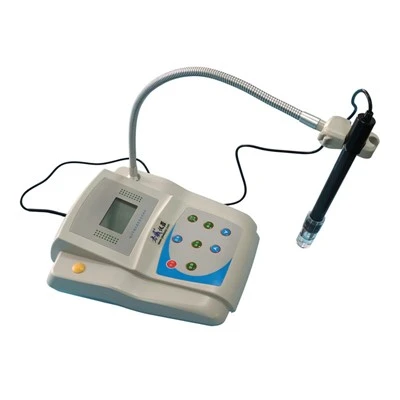
For routine chemical oxygen demand( COD) testing in environmental laboratories, wastewater treatment facilities, and industrial water quality control departments, the QW-COD-T benchtop COD analyzer is designed. To evaluate the oxidifizable substances in water samples, it employs a quick catalytic technique based on the chromium method.
Under controlled metabolism problems, the water sample and COD reagents interact during the test. Trivalent chromium ions( Cr3+) are produced during the digestion process, and the analyzer determines their concentration using spectrophotometric measurements to determine the desired COD value.
product key technologies

Benchtop COD analyzer is designed for rapid measurement of chemical oxygen demand (COD). COD represents the amount of oxidant consumed by a strong oxidant under standard test conditions. This parameter indicates the total reducing substances in a water sample, where organic matter is the main component, together with nitrites, sulfides, and ferrous salts. A higher COD reading means more severe organic pollution in that water body.
The analyzer uses a composite catalyst in its reagent formulation. This catalyst accelerates oxidation and reduces chloride ion interference. After the digestion device completes a fast redox reaction between the sample and the reagent, trivalent chromium ions (Cr³⁺) are produced. The instrument then determines the Cr³⁺ concentration by spectrophotometry and calculates the corresponding COD value.
Stability, accuracy, measuring range, and user convenience have been improved in this device. It meets different testing needs across various scenarios. Common applications include monitoring industrial wastewater from chemical, petroleum, coking, paper, metallurgical, brewing, and pharmaceutical industries, as well as analyzing municipal sewage, domestic wastewater, and surface water from rivers and lakes.

Performance Indicator
|
Model |
QW-COD-T |
|
Ambient Temperature |
5 - 40℃ |
|
Relative Humidity |
< 85% (no condensation) |
|
Power Supply |
AC 220V±10% / 50Hz |
Technical Parameter
|
Model |
QW-COD-T |
|
Method of Determination |
Rapid catalytic method (chromium method) |
|
Measuring Range |
0~150 mg/L low range; 100~1000 mg/L high range (diluted measurement is required when the concentration is above 1000 mg/L) |
|
Measuring Error |
5~100 mg/L, absolute error ≤ ±5 mg/L; 100~1000 mg/L, relative error ≤ ±5% |
|
Dissolution Temperature |
165 ± 1℃ |
|
Dissolution Time |
20 minutes |
|
DeterminationTime |
20 minutes. Can be used to measure 9 wells or 25 wells simultaneously (depending on the configuration of the digestion instrument) |
|
Temperature Indication Error |
<±1℃ |
|
Temperature Field Uniformity |
≤ 2℃ |
|
Indication Error |
≤ ±2% |
|
Record Storage |
It can store 20 measurement results |
COD Calibration and Standard Curve Management
For reliable COD analysis, steady calibration is necessary, especially when different wastewater types are required or results must be maintained consistently over time.
The common calibration function of the analyzer can aid researchers in establishing a reliable relationship between COD concentration and optical response. A built-in common curve can be used for regular testing where necessary, and a user-defined calibration allows the laboratory to adjust the measurement curve in response to its validated scientific requirements.
Use correct COD regular solutions and a documented procedure for laboratories using various sample matrices for calibration. To support inside quality control and result tracability, keep track of the validation date, regular concentrations, and test conditions.
Recommended calibration checks:
● Verify the instrument response with appropriate COD standard solutions.
● Check calibration performance across the required measurement range.
● Use the same reagent system and digestion conditions for calibration and routine samples.
● Recheck the calibration after reagent changes, maintenance or unexpected measurement deviations.
● Retain calibration records as part of the laboratory's quality management procedure.
Application
COD testing is supported by the QW-COD-T benchtop COD analyzer for use in laboratory research, climate monitoring, wastewater treatment, business pollution control, and other areas. Organizations that require regular Mackerel analysis of various water and wastewater samples are suited for its double measurement ranges and compatible digestion workflow.
1. Environmental Protection Departments and Monitoring Stations
The analyzer can be used to test COD in collected surface water, provincial wastewater, and commercial discharge samples in environmental monitoring laboratories and monitoring stations for water quality. Monitoring records enable you to support program sampling procedures, pollution investigations, and water quality assessments.
2. Municipal and Industrial Wastewater Treatment Plants
To assess influent and waste quality and to track changes during treatment, wastewater treatment plants require COD data. Operators can use the QW-COD-T to perform regular laboratory checks on wastewater samples taken at various treatment stages, assisting them in determining abnormal changes and evaluating treatment performance.
3. Third-Party Environmental Testing Laboratories
Samples from a variety of clients and industries are frequently handled by third-party screening companies. Low- and high-range COD testing is supported by the analyzer's lower- and high-range measurement options for various sample concentration levels. Laboratoares should adhere to their approved procedures, quality control policies, and appropriate reporting standards.
4. University and Research Laboratories
The QW-COD-T is available for use by universities and research institutions in ecological engineering research, wastewater treatment studies, and other water quality experiments. Its digestion procedure allows for regular analysis of ready water samples and practical laboratory training.
5. Industrial Wastewater Quality Control
Regular COD checks may be required for manufacturing plants in the fields of chemical handling, petroleum, coal, paper, metallurgy, brewing, and pharmaceutical production. When testing complicated wastewater matrices, it is crucial to use sample-specific method verification because the composite catalyst in the reagent formulation helps to reduce chloride interference.
FAQ
1. What is the COD measurement range of the QW-COD-T?
The QW-COD-T has a lower measurement range of 0 to 150 mg/L and a high range of 100 to 1000 mg/L. Before dimension, dilution is required for samples with COD concentrations higher than 1000 mg/L.
2. What is the measurement accuracy of the QW-COD-T COD analyzer?
For samples in the 5– 100 mg/ L range, the absolute measurement error is≤± 5 mg/ L. For samples in the 100– 1000 mg/ L range, the relative measurement error is≤± 5%.
3. How does the QW-COD-T reduce chloride interference?
To speed up the oxidation reaction and lessen salt ion interference, the instrument uses a hybrid catalyst in its chemical formulation. Users should verify the appropriate sample pretreatment and scientific procedure for high-chloride wastewater because the published specifications do not specify a maximum chloride tolerance.
4. Does the COD analyzer include a digestion function?
Before spectroscopic determination, the COD test calls for managed digestion. A appropriate COD digester, which regulates the digestion temperature and duration, is used with the QW-COD-T. The analyzer finally performs spectrophotometric measurements of the digested sample.
Hot Tags: benchtop cod analyzer, China benchtop cod analyzer manufacturers, suppliers, factory, cod analyzer, Portable COD Meter