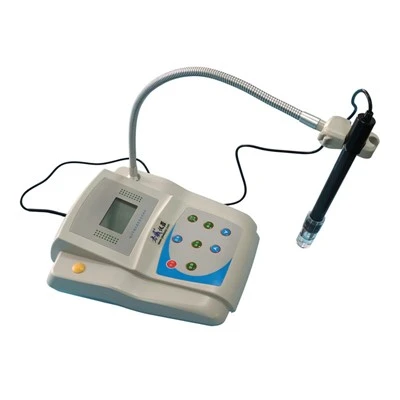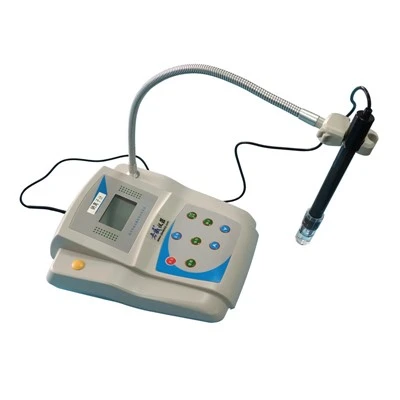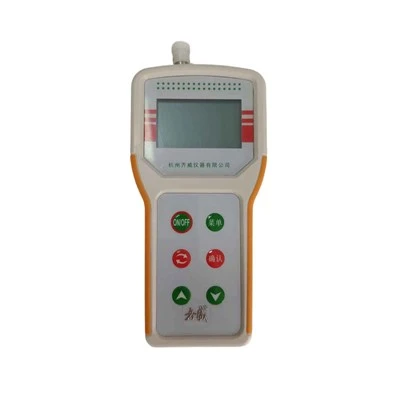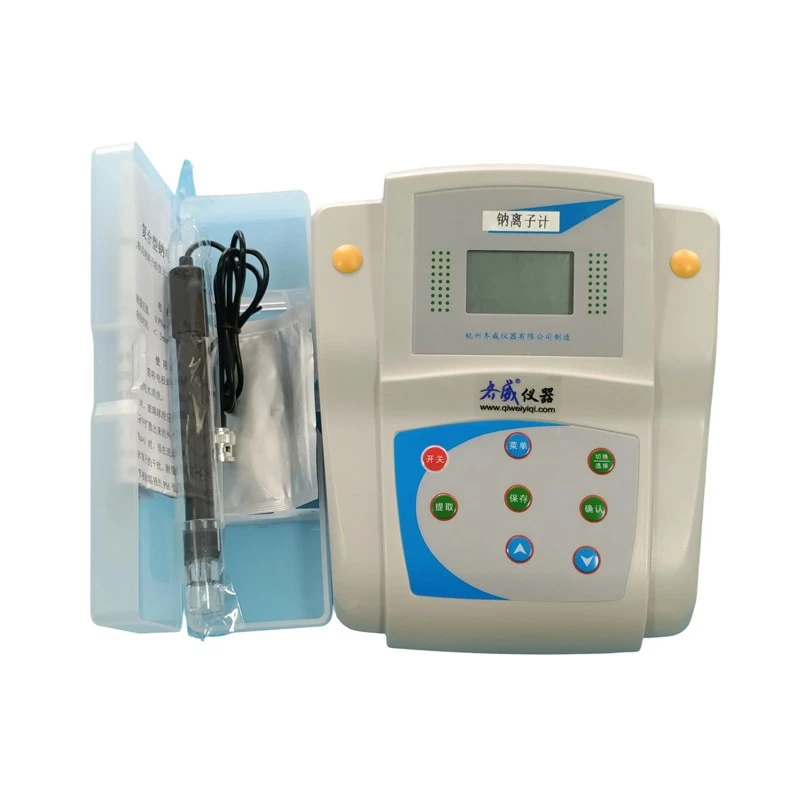
Hangzhou Qiwei Instrument Co., Ltd. is one of the leading manufacturers and suppliers of benchtop multi-parameter chlorine ion concentration meter in China. With a professional production team, we are able to meet the needs of the majority of our customers. Welcome to wholesale bulk benchtop multi-parameter chlorine ion concentration meter in stock here from our factory. We also accept customized orders.
Chloride Ion (Cl-) vs. Residual Chlorine: What Is the Difference?
Residual chlorine and chloride ion (Cl⁻) are two distinct water-quality metrics and should not be used interchangeably.
Naturally occurring in water, chloride (Cl⁻) is a negatively charged ion that is frequently found in salts, wastewater, food items, concrete pore solutions, and other materials.
Chlorine-based disinfectant species that remain in treated water after chlorination are referred to as residual chlorine, which includes free and mixed chlorine.
Instead of measuring free or residual chlorine, a chloride ion meter measures the concentration of chloride ions (Cl⁻).
When choosing an instrument for water analysis, wastewater testing, food quality control, or concrete chloride evaluation, this distinction is very crucial.
Chloride Ion (Cl⁻)
Target: Chloride ion
Unit: Commonly mg/L, ppm, or other concentration units
Typical measurement technology: Chloride ion-selective electrode
Applications: Water, wastewater, food, concrete, environmental testing
Residual Chlorine
Target: Free chlorine, combined chlorine, or total residual chlorine
Common applications: Drinking-water disinfection and sanitation control
Measurement methods: Colorimetric, amperometric, or other chlorine-specific methods
A specialized chlorine analyzer should be chosen rather than a chloride ion meter if your application calls for the detection of free or residual chlorine.
product key technologies

Designed and engineered specifically for chloride content testing in water samples, the PXS-CL benchtop multi-parameter chlorine ion concentration meter fits perfectly with high-purity water applications at thermal power facilities. It keeps close track of key water quality indices including steam, condensed liquid and boiler supply water with high precision.
This apparatus also finds broad usage in academic institutions, research centers, petrochemical and microelectronics fields. It is able to conduct precise measurement and analysis of chloride ion levels and ion activity in natural surface water, industrial waste water and other types of water solutions.
Technical parameters
|
Model |
PXS-CL |
|
Measuring range |
pCL: (0.00~6.00)pCL; CL-: 0.355μg/L~35.5g/L; mV: (-1800~1800)mV |
|
Resolution |
0.01CL |
|
Basic error of the electronic unit |
±0.02 pCL ±1 word |
|
Instrument basic error |
±0.05 pCL |
|
Calculation error |
±0.3% |
|
Repeatability error |
≤±0.03 pCL ±1 word |
|
Stability of the electronic unit |
±0.02pCL/3h |
|
Temperature compensation range |
(5.0~50.0)℃ |
|
Size |
230×190×80mm |
|
Weight |
1.5kg |
Features
-
Adopting single-chip microcomputer intelligent control technology, the PXS-CL benchtop multi-parameter chlorine ion concentration meter is professionally developed and produced. The whole device is effortless to run, with distinct digital indications that can be recognized effortlessly.
-
This apparatus is fitted with a dual-function temperature compensation module, covering manual and automatic regulation. Connect an external temperature sensor, and the unit will enable automatic compensation while showing real-time water temperature. If no such sensor is linked, it will switch over to manual regulation, and the manually configured temperature data will be displayed alongside. The temperature sensor is a peripheral accessory and can be ordered individually.
-
This equipment can show pCl readings directly, as well as present chloride ion concentration results simultaneously. It features a concise and sophisticated layout, compact build for easy transport, and a stylish exterior.
Working condition
|
Ambient Temperature |
(5~40)℃ |
|
Relative Humidity |
≤80% |
|
Power Supply |
AC 220V ± 22V; Frequency 50 ± 1Hz |
|
Interference |
There is no interference from other magnetic fields except the Earth's magnetic field |
|
Vibration |
No significant vibration |
Chloride Ion Testing in Concrete
Because chloride ions can move through concrete and increase the danger of corrosion under the right circumstances, chloride contamination is a crucial factor to take into account when evaluating concrete and reinforced concrete.
For testing chloride extracted from concrete or cement-based products, a chloride ion meter can be integrated into a laboratory workflow.
Typical workflows consist of:
1.Gather a representative sample of cement or concrete.
2.Prepare the material in accordance with the chosen lab protocol.
3.Put the soluble chloride in the proper solution.
4.As needed, condition the extract.
5.The chloride electrode should be calibrated.
6.The produced extract should be measured.
7.Note the concentration of chloride.
8.Examine the outcome in relation to the pertinent project or material specification.
Chloride levels inside undamaged concrete structures are not immediately measured by the meter. In accordance with the chosen testing protocol, the concrete sample must first be prepared and removed.
Chloride Ion Calibration Guide
Consistent electrode conditioning and suitable calibration standards are essential for accurate chloride measurement.
Step 1: Get Chloride Standards Ready
Choose chloride standards that span the samples' anticipated concentration range.
Step 2: Electrode Conditioning
As directed by the electrode, rinse and condition the chloride ISE.
Step 3: Begin Calibration
After measuring the chosen chloride standard, watch for the reading to stabilize.
Step 4: Include Extra Calibration Points
Use extra standards for multi-point calibration in situations that call for a larger measurement range.
Step 5: Check the Calibration
Prior to testing unknown samples, examine the calibration response.
Step 6: Measure the Samples
Use the same sample preparation and conditioning technique that was used for calibration.
To reduce measurement variation brought on by variations in ionic strength or sample composition, calibration standards and samples should be handled consistently.
FAQ
1.Are chlorine and chloride the same thing?
No, chlorine refers to chemical species based on chlorine, whereas chloride (Cl⁻) is an ion. Water disinfection is frequently linked to both free and residual chlorine.
2.Can residual chlorine be measured with a chloride ion meter?
No. The purpose of a chloride ion meter is to measure chloride ions (Cl⁻). An appropriate analytical technique specific to chlorine is needed for both free and residual chlorine.
3.Is it possible to use this meter for wastewater?
Indeed. When the sample concentration and matrix are suitable for the chosen chloride electrode and analytical method, chloride detection can be integrated into laboratory wastewater and process-water testing.
4.Is it possible to quantify chlorine in concrete?
After the proper sample extraction and preparation, chloride can be detected in concrete-related materials. It is not recommended to utilize the electrode by just putting it into concrete that is still intact.
5.Is it possible to test food with the meter?
After proper sample preparation and measurement protocol validation, it can be used to specific food and food processing samples.
6.Which electrode is needed?
For chloride-specific measurement, a suitable chloride ion-selective electrode (Cl⁻ ISE) is needed.
7.What makes calibration crucial?
The connection between electrode response and chloride concentration is established by calibration. The anticipated range of sample concentration should be covered by calibration standards.
8.Is an ISA solution necessary for measuring chloride?
The choice of chloride electrode and analytical method determine the demand. Observe the conditioning and ionic-strength adjustment instructions provided by the electrode manufacturer.
Hot Tags: benchtop multi-parameter chlorine ion concentration meter, China benchtop multi-parameter chlorine ion concentration meter manufacturers, suppliers, factory, Benchtop Multi Parameter Chlorine Ion Concentration Meter, electrochemical instruments, Portable Multi Parameter Calcium Ion Concentration Meter, Portable Multi Parameter Iodide Ion Concentration Meter, Portable Multi Parameter Kalium Ion Concentration Meter, Portable Multi Parameter Sodium Ion Concentration Meter